Tuesday, July 20, 2021

1893 CHICAGO WORLDS FAIR

 In 1871, the city of Chicago was destroyed by a raging fire. Twenty years later, the city showed the world  that even a disaster of apocalyptic proportions could not keep it down for long. 


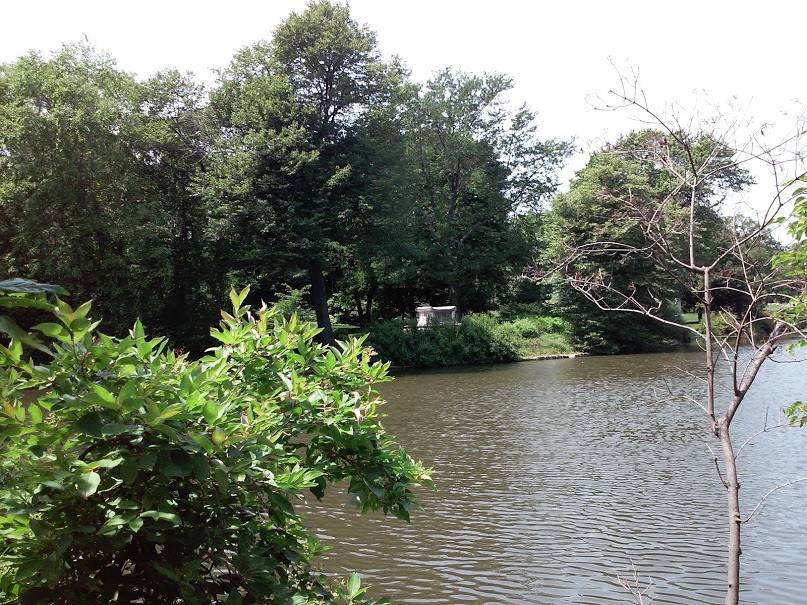
The Columbian Exposition, of the World's Fair of 1893 was a spectacular event that showcased the best of the industrialized modern Gilded Age. Located in the South Side's Jackson Park and Midway Plaisance (near the University Of Chicago), the Fair encompassed 690 acres, had 200 new buildings designed in the style of Neoclassical Architecture, and had multiple bodies of water in the form of canals and lagoons. Attractions included anthropology, rail, country & state exhibition buildings, guns & artillery, religions, a moving walkway, and horticulture. There was also fine artists, music, invention, and manufacturing exhibitions. Forty Six countries around the world participated and the event had 27,300,000 visitors. Opening to the public on May 1, 1893 the fair remained open until October 30, 1893.


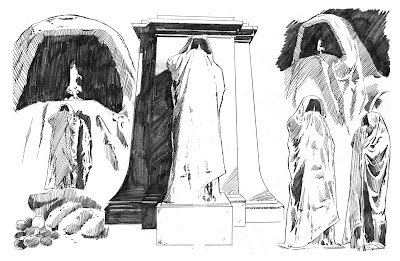
The Columbian Exposition is the setting for events in both Visitations 5 and 6. There was a great amount of research done in order to get the issues done Below are some of the great photos and art that helped bring those stories to life. 

Visitations 5 is available for purchase HERE. Visitations 6 will be available in October and can be pre-ordered HERE


Friday, March 5, 2021

Will Eisner Week


It's Will Eisner Week.

Will Eisner is known as the father of the graphic novel. A true master of design and layout, Eisner looked at comics not as what they were, but what they could be. I first discovered his work when the book Comics & Sequential Art was recommended to me:


Among other things, the book taught me the importance of page layout and panel borders:


Comics & Sequential Art was great, but the book I found that really inspired me was The Dreamer.


The dreamer tells the story of Eisner's early days as a comic book artist, which also happened to be at the dawn of the comic book industry. Through sacrifices and a strong belief in himself, the main character "Billy" ( who was a thinly disguised Will Eisner) followed his heart and his instincts in order to carve out a career for himself.


Eisner's best known work is the Spirit. In it, Eisner experimented with the comics medium, stretching the accepted boundaries of layout and design:


His first "Graphic Novel" was A Contract With God. After he did semi - autobiographic works Droopsie Avenue,  A Life Force,  and To The Heart Of The Storm. He also did the visually stunning Life On Another Planet:


When I was an undergrad at Loyola, I did a weekly comic strip. I tried to make it very Eisner-like, changing  the title every week ( which drove my editor crazy) and incorporating the title into the strip.


In 2001, Eisner shared a stage with Neil Gaiman at the Chicago Public Library. After their talk, they had a book signing. Gaiman had a huge line, Eisner didn't, which was fine with me. I walked over to Eisner, introduced myself and shook his hand. He signed my favorite page in The Dreamer, which I took out of the book and framed afterwards.


Will Eisner passed away in January 2005. Learn  more of Will Eisner Week  HERE

Thursday, December 3, 2020

DESIGNING VISITATIONS ISSUE 3

Each issue of Visitations is designed to push the boundaries of how to tell a comic book story. In Issue 2, for example, the book requires the reader to physically move the book around and around. The third issue of the book was designed to be more intriguing.


Visitations 3 puts the reader into an area of Chicago that is now extinct: the Levee District. The Levee,  at and surrounding the location of the  Cermack/Chinatown Red Line El stop, was literally the birth place of organized crime in the city. Not just the birthplace, but the area in which the syndicate known as the Chicago Outfit operated in through to the 21st Century. Chicago crime was founded on gambling and prostitution. When I was growing up in the Lincoln Square area, I witnessed a little bit of what the Levee may have been like.  Lincoln Avenue north of Foster Avenue is known as Motel Row. The motels were originally  built in the 1950's for traveling salesmen but became instead hourly stopovers for streetwalkers and their customers.  It was not a pretty sight to behold. When I read Karen Abbott's book, Sin In The Second City, I realized that the Levee was about a hundred times worse then Motel Row, which is saying something. I knew I wanted write a story and get on my soapbox about it.


Lincoln Avenue's Motel Row, which is still is still
operational,  just a lot quieter than it used to be.

I wasn't sure exactly how to tell the story, then a movie was brought to my attention. Lady In The Lake, directed and starring Robert Montgomery, was a 1947 Philip Marlow film in which the camera is the protagonist. The entire movie is point of view and the only time you see the star is when the camera looks into a mirror. I decided that was the way to tell the Levee story. The reader is the main character - an out of town salesman who ventures into the Levee looking for debaucherous fun and instead finds murder. 


One of the only scenes in Lady In The Lake where 
the audience sees the film's star.

In addition to this I decided to change the art style to something reminiscent of the era. Charles Dana Gibson was an illustrator in the late 19th century. He created the image of a modern woman known as the "Gibson Girl". He used a multiple line style that was perfect for the grittiness of the environment while keeping with the look of the times.


"The Gibson Girl" illustrated by Charles Dana Gibson

As the salesman goes deeper into the story, the art changes from grey to full color to straight black and white with aggressive red to add to the mood. 


Visitations 3 is now available. Print copies are $10. Digital copies are $5. Please email visitationscomicbook@gmail.com for more information.


Order a free PDF of Visitations 1 by emailing us here: visitationscomicbook@gmail.com

Tuesday, November 3, 2020

PRESIDENTAL CONNECTIONS


Election Day is upon us. 

In the past 244 years, the United States has had 58 Presidential Elections. Illinois became a state in 1818: 42 years after the birth of the U.S. and Chicago was founded 15 years later. Although it missed out on the early elections, the state has been an integral part of the nation's history.


In 1860, Abraham Lincoln was elected 16th President Of The United States. Although he was born in Kentucky, Illinois became his home in 1832. Lincoln lived in Springfield, and he was nominated as the  Presidential candidate at the 1860 Republican Convention in Chicago. After his assassination in 1865, Lincoln's funeral procession moved through Chicago and what would later be known as Grant Park was used as a staging area for the event.


Ulysses S. Grant was elected President in 1868. Born in Ohio, Grant lived in Galena, Illinois at the time of his election. A national hero, Grant has many monuments in the state and the downtown Grant Park, "Chicago's front yard", was named for him.


Ronald Reagan, the United States 4oth president, wa elected to the office in 1980. He was born in Tampico, Illinois, grew up in Dixon, and attended Eureka College in Eureka Illinois. He left the state in 1932.


The 44th President was Barack Obama. Born in Hawaii, Obama moved to Chicago in the 1980's and was elected in 2008.  His victory rally took place in Grant Park.  


The Obama family still owns their home in the Chicago neighborhood of Hyde Park.


The current office holder, Donald Trump, was elected as the 45th President in 2016. He  has no real connections to the state of Illinois. However, he does have a building in the middle of downtown Chicago. The site of the former Sun-Times newspaper building, The Trump Tower is now a recognizable feature of the Windy City's skyline and will be for the foreseeable future.


Order a free PDF of Visitations 1 by emailing us here: visitationscomicbook@gmail.com


Thursday, October 29, 2020

CHICAGO'S HAUNTED GRACELAND CEMETERY


2016 was the year Visitations issue one came out. As  people walked through the aisles of C2E2, I would ask them questions about their knowledge of Chicago ghost stories. Because the graveyard in the comic is based partially on Graceland Cemetery ( see my earlier blog post HERE) I would ask the passersby if they had heard of it. Some had and some hadn't. I got a surprise from someone early Sunday morning, the last day of the convention: 

"Have you ever heard of Graceland Cemetery?"

"Yeah, my friends and I used to break in there at night and get drunk."

"Really? Did you ever see anything while you were there?"

"...Mmmrf..."

" I'm sorry- did you ever see anything when you were there?"

"We were drunk."

" Um - what did you see?"

" An old man in a newsboy cap floating towards us."

"Floating??"

" Yeah, but we were drunk."

"Did your friends see this too?"

"Yes."

"Um, alcohol doesn't work THAT way..."

This is not the only personal testimonial I've received about the cemetery. In fact, the graveyard is one of those places that has, not only a lot of ghost stories surrounding it, but if you talk to enough people you run into someone who has personally experienced the supernatural there. There is a long history of interesting tales from the place.

Established in 1860, Graceland Cemetery's first residents were individuals moved from the Lincoln Park graveyard known as City Cemetery. It is a stone's throw away from Wrigley Field and is the final resting place of many famous Chicagoans such as Daniel Burnham, George Pullman, Marshall Field, Mayor Carter Harrison, Potter Palmer, Cyrus McKormick, John Kinzie, Louis Sullivan, and Allan Pinkerton. Architect Louis Sullivan, in addition to being buried there also designed a number on monuments. The monuments that populate the cemetery are unique works of art that stand out well past the Victorian era in which they were erected.


The monuments are so interesting that visitors can't help but be impressed. However some of these carry some strange stories along with them. For example, the tomb of a man named Ludwig Wolff was carved from a built up mound with stairs leading down it. There is a vent at the top. The reason behind this, according to legend, is that Wolff himself was afraid that he would be buried alive and had ventilation installed along with literal bells and whistles. While no bells have been heard, something has been seen lurking around the tomb at night. Apartment dwellers nearby have seen an animal with florescent eyes, which has been identified as Wolf's phantom dog, guarding his master's burial place. Many believe this is only a coyote the lives in the cemetery grounds, but nobody knows for sure.


Architect Daniel Burnham has been see near his burial place. He stands on the banks of the island where he is buried with his hands in his pockets. One wonders what he is thinking about.


Reports of a little girl in victorian clothes frolicking around the cemetery during rainstorms are legendary. Truthfully, one just has to look at the monument of Inez Clarke and the imagination takes over. That being said, the statue of the child has numerous stories of disappearing from it's perch, including a first hand account that was related to me at the Chicago Ghost Convention a number of years ago. Oddly enough, her disappearances from the spot have occurred even after a glass case was placed over her statue. Children visiting the cemetery with their families have wondered off only to be found later claiming they were playing with the girl.


Lastly, is there statue known as Eternal Silence. It is one of two monuments  by Lorado Taft. An uncomfortable image reminiscent of death- or at least the Ghost Of Christmas Future of Charles Dickens classic "A Christmas Carol". There are many stories surrounding the stutue. First, it is seen by many as the mystical Ferryman of Greek legend who would provide passage across the River Stix. Surrounding the feet of the statue are numerous coins by visitors hoping for safety to the next life. Second, is the story that staring into the statue's eyes will show someone the after life- or a vision of the person's own death. I personally was afraid to look and find out...


There are many other interesting monuments within Graceland Cemetery.  Certainly it is worth a visit to anyone interested in art or architecture. Graceland Cemetery is truly an important part of Chicago and it's history. 


Order a free PDF of Visitations 1 by emailing us here: visitationscomicbook@gmail.com

Visitations Character Sketches and Plans

 One of the fun things about creating Visitations is designing the characters and settings. Some are inspired by real life people and place...